Pastel On Black Paper: Cat Portrait
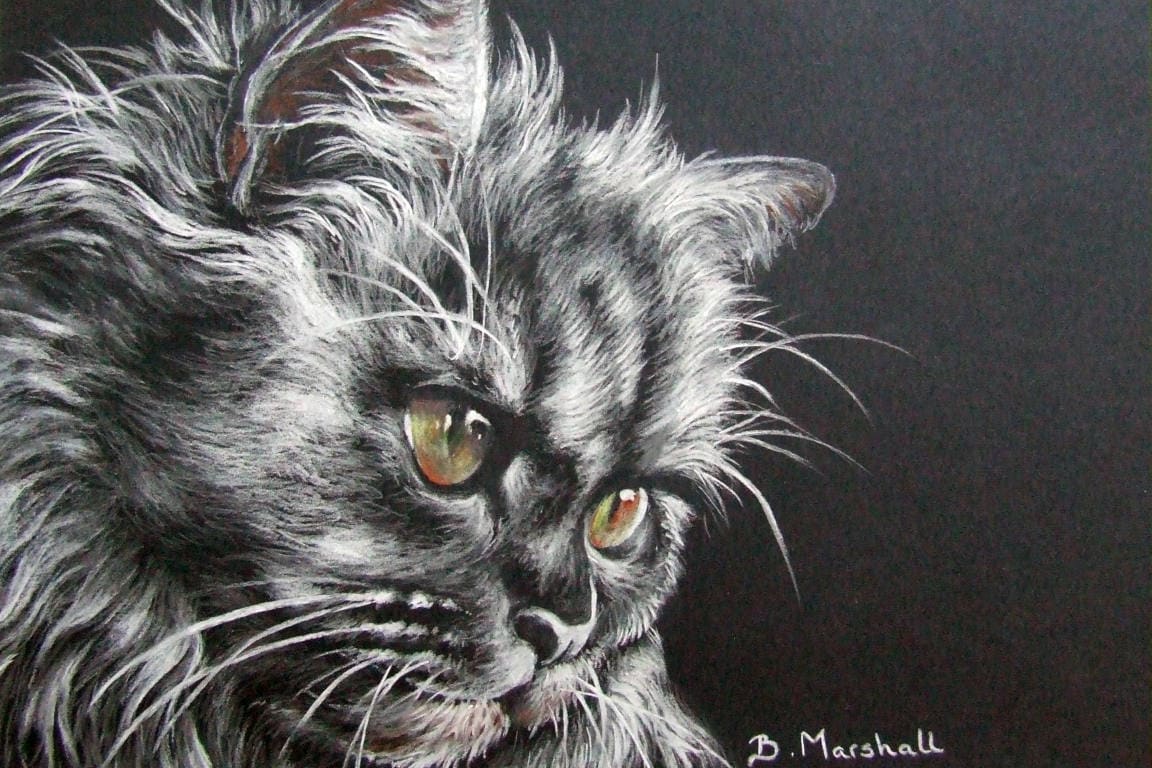
The stark contrast of soft white pastel on black paper lends itself beautifully to certain subjects, and few are as captivating as the feline form. This portrait of a cat explores the power of simplicity.
With a minimal use of shading and detail, I strived to capture the essence of the cat’s personality. The result is a striking image where the white lines seem to create a sense of both fragility and quiet strength.
This article delves into the techniques and artistic choices behind this delightful pastel drawing, examining how such a simple approach can achieve such a profound effect.
Original Pastel On Black Paper
This little drawing was an experiment for me. I had dabbled with the idea of doing a monochrome drawing for a while.
After browsing through Pinterest, I had seen several drawings and oils in white and sepia on dark or black paper and enjoyed the striking effect. These images inspired me to create my own drawing and see how it would turn out.
Pastel Art Materials
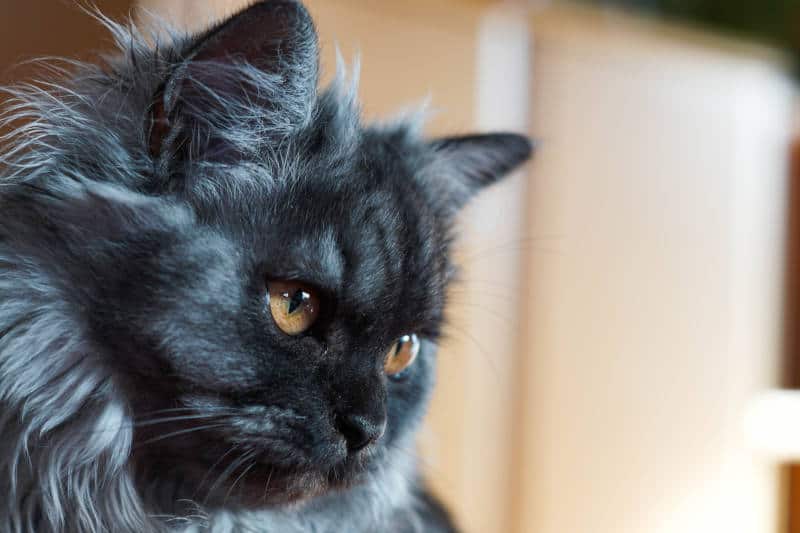
I found a photo of a long-haired cat that appealed to me, sharpened my white pastel pencil, and got my soft pastel stick ready.
I decided to use a smooth black “sugar” paper to draw on.
View Another Cat Portrait Drawn From A Photo
Black And White Cat Portrait
I am going to walk you through the process of how I drew my cat portrait in pastel on black paper. I hope you pick up a few tips along the way if you are also dabbling in creating a monochrome drawing.
Let’s get down to starting the drawing on black paper.
Drawing The Eyes
When studying the reference photo, the eyes were very striking. To make them stand out strongly in the drawing, I thought to put color into the eyes. A rich colour to counteract the strength of the black paper and white pastel, as in the photo reference.

I chose green and terracotta for impact. I was very careful to create a luminosity and glow that would grab the attention of the viewer. Including the highlights in the eyes with a strong white added to the beauty of the expression and enhanced the colours.
Drawing The Fur
The longer fur of this reference photo encouraged me to aim for a soft and loose interpretation. This meant keeping my wrist and hand movements relaxed and flowing when moving over the paper.
Now, drawing on black paper means instead of filling in the darks, I need to leave them to show through, creating the shadow areas. Essentially, I am working back to front on this drawing.
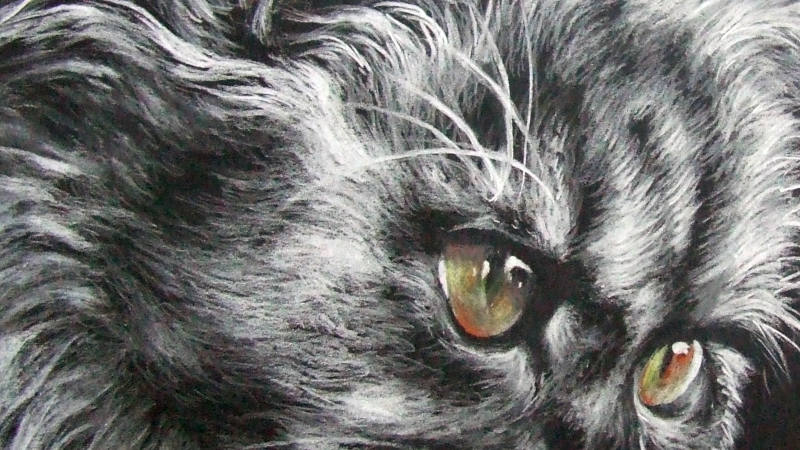
Starting with the face, I work outwards from the eyes. I was building up the layering of the pastel to create denser highlights, all the while keeping my strokes free and flowing. Once I had started drawing, leaving the black paper showing through to create the shadows became a natural thing to do.
Following the direction of the fur movements led to the edges of the face. Where the face met the neck, the fur became much longer.
The Ears
Before I could move forward, the ears had to be drawn in. Outlining the shape of both ears definitely gave some structure to the drawing and made it more interesting.
The ear on the far side of the face I made more subtle, delicate, and faded to give the impression of being further away. The closer ear was bolder and the ear hairs strongly drawn in.
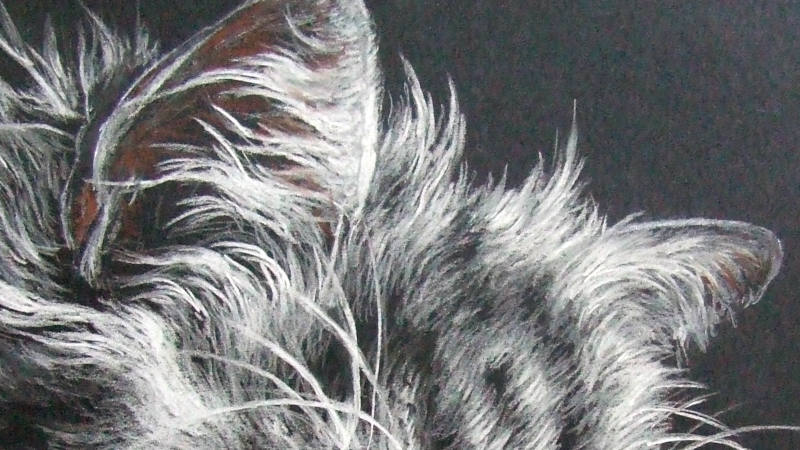
Now that the ears were included, I could work around them and add in the longer fur.
I first drew in the fur that was in front of the main ear and worked my way around the bottom and behind it.
The remainder of the neck fur went off the paper, and I took care to blend the shorter fur of the face into the longer to create a seamless transition.
Finishing The Face
Now to move over to the other side of the face and finish off the edges. I wanted to keep the natural, loose feel of the fur and keep it soft. This meant carefully drawing in longer hairs to soften the edges.
From past experience, it is very easy to overdo this. A few longer hairs in slightly varying directions and lengths say a lot more than doing too much.
Moving from under the eye towards the chin, the fur is shorter and more controlled. Just a few short lines break the line and make it look natural.
The final bodywork is to finish the fur beneath the chin on the far side of the face. This body of fur adds the finishing bodywork that completes the drawing.
Chalk Pastels: How To Frame Soft Pastels
The Final Touches
The last thing to do on my white pastel on black paper art, is place the whiskers and eyebrow hairs in.
For them to stand out, they need to be bold and strong. In keeping with the rest of the drawing, keep the lines varied in length and direction.
On reflection, I thought I needed to add some extra touches of colour to bring the drawing together as a cohesive whole. I added the terracotta colour into the ears, being careful not to disturb the lines of the hairs.
I also added a few lines of colour into the chin. Just a hint
The adage “less is more” is very true here.
I decided that was enough and to leave my soft pastel on black paper art as it is now.

Conclusion To My Pastel On Black Paper Experiment
Considering the monochrome drawing was a trial, it turned out quite well.
Even though it was not completely monochrome, the addition of colour certainly added to the charm of the finished artwork.
I hope you enjoyed reading my creative journey through the drawing process of my little cat drawing.
If you would like a pet portrait for your home, please do not hesitate to reach out to me by completing the questionnaire form. I look forward to hearing from you.